Firstly, silage is a strategic tool to ensure productivity, maintain nutritional value, and reduce costs related to purchased feed for the herd.
When properly planned, it becomes a "treasure chest" of energy and nutrients that supports the animals during critical periods, such as droughts or low pasture availability.
Continue reading and discover everything about silage!
Why is silage strategic for livestock farming?
In this way, planning and producing high-quality silage directly reduces the need for concentrated supplementation and keeps the cattle performing at their best.
Thus, it not only represents savings but also ensures food stability and prevents drops in milk production or weight gain.
The clearest advantages include:
- Lower costs with industrialized feed
- Greater control over diet quality
- Maximum use of the harvest
- Food security even during times of scarcity
What defines good silage?
The difference between silage that delivers results and silage that causes losses lies in the management.
Therefore, essential points include:
- Harvesting at the right time — for corn, the ideal is to harvest when the dry matter content is between 32% and 35%.
- Efficient compaction — eliminates oxygen and reduces the proliferation of unwanted fungi and bacteria.
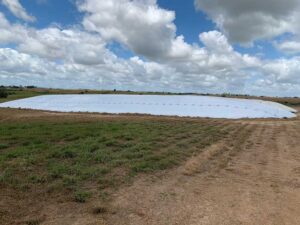
- Quality sealing — prevents air from entering and maintains an anaerobic environment.
- Protection against weather conditions — high-tech tarps and plastics preserve the integrity of the forage.
How to ensure nutritional value and reduce losses
Proper conservation is what ensures that the nutrients reach the trough intact.
However, attention is required in two key areas:
- Processo de ensilagem bem executado
Um corte no momento ideal, seguido de compactação uniforme e vedação imediata, cria as condições ideais para a fermentação lática, responsável pela preservação do alimento. - Proteção contra oxigênio e umidade
O oxigênio é o maior vilão da silagem. Ele acelera a deterioração e abre espaço para microrganismos que comprometem a qualidade e a segurança alimentar.
Direct impact on herd performance
As a result, poorly stored silage can lose up to 30% of its volume and a significant portion of its nutritional value.
This translates into:
- Lower voluntary intake by the herd
- Reduced weight gain or milk production
- Increased costs with supplementation
- Higher risk of feed-related diseases
On the other hand, when silage is properly made, the effect is the opposite: more energy per kg of feed, better conversion, and improved profitability in the trough.
Silage as a tool for savings and security
In beef and dairy farms, silage acts as a reserve that protects the herd from climate fluctuations and the volatility of the input market.
So, investing in technology and good management practices means:
- Fewer physical and nutritional losses
- Stable production throughout the year
- Higher return on investment in the field
If you want to ensure nutritious, stable silage with less waste, explore solutions that help producers store and protect their forage more efficiently.