Pre-drying has a guaranteed place on farms that seek productivity and cost control.
However, those who already produce it know that it does not forgive carelessness.
In many cases, the weather cooperates and the cutting is well done. Even so, a simple handling or sealing error can jeopardize part of the work. When this happens, the problem rarely comes from the field and almost always lies in the details of the process. After all, the technique works because it preserves the nutritional value of the forage and reduces dependence on weather conditions.
However, it only delivers the expected result when each stage is carried out with precision. Therefore, moisture, protection, and storage become decisive factors for the final quality. These three points determine whether the feed will remain in good condition for months or begin to deteriorate even before reaching the trough.
Shall we understand them better?
Factors that influence the quality of pre-drying
Moisture
The first risk to the quality of pre-drying It is extremely important to pay attention to the moisture ranges of the forage to be stored! Fermentation decreases significantly when the forage has moisture below 50%. Under these conditions, the bales start to mold quickly after being opened. Therefore, you must increase the number of layers to improve sealing and better preserve the material. In practice, out-of-range moisture is the most frequent problem. Many producers, trying to save time, bale the forage while it is still wet. As a consequence, uncontrolled fermentation occurs, with internal heating and protein loss. These effects cause the bale to darken, change its smell, and reduce the nutritional value of the feed. During the baling process, it is essential to make the bales as dense as possible. This density increases the amount of dry matter per volume and, at the same time, reduces the oxygen inside the bale. Thus, losses from respiration, heating, and forage quality drop after baling and wrapping are diminished. Wrap the bales with stretch film as quickly as possible to reduce damage caused by heating. Studies show that unwrapped bales maintain internal temperatures of 49 to 55°C for more than 3 weeks after baling, with significant protein and NDF losses.
Application of Agricultural Film
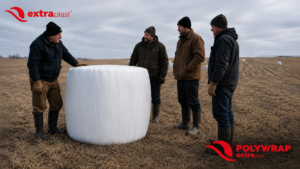
It is always recommended that the bale wrapping process be carried out in an area close to the storage site, which must be clean, dry, and well drained, so that the bales undergo minimal handling, avoiding holes and damage that could allow air to enter. Before starting the process, it is important to check whether the wrapper machine maintenance is up to date. Also verify if the rollers are clean, as they often accumulate adhesive and cause excessive increase in pre-stretching. During preparation, adjust the machine’s pre-stretching unit to align the film with the bale’s horizontal and central axis. Then, check the degree of pre-stretch by measuring the width of the film applied on a flat surface of the bale. Avoid applying the film in the rain. Its tackiness may be reduced, allowing oxygen to enter later, causing deterioration. Regardless of the intended storage time, a minimum of 6 layers must be applied. Follow the 2+2+2 method, meaning apply 6 complete wraps with 50% overlap. Using fewer layers of film reduces the coverage thickness of the bale silo, which favors oxygen entry and, consequently, heating, loss of quality, and the development of fungi and toxins.
Transport and stacking
Even with a well-executed process in the field, losses can reappear during transport and storage if these stages are not carried out correctly. Therefore, pay extra attention when beginning to handle the bales. Avoid using grabbers without pressure adjustment, as they increase the risk of damage. Excessive force breaks the bale’s compacted layers, allowing air to enter and accelerating the forage degradation process. As a result, part of the feed’s nutritional value is lost even before it is used.
Storage
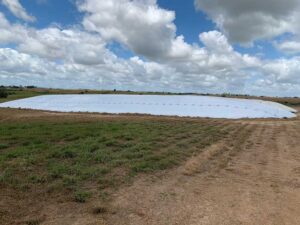
Stack the cylindrical bales with a high dry matter content in a horizontal position, with the sides facing downward. In this case, it is possible to stack up to three units. For wetter, denser, and heavier bales, also keep them in a horizontal position, but limit the stack to two units on top of each other.
How to prevent losses and keep the pre-dried forage protected at every stage
The choice of materials, the time between cutting and sealing, the storage method — all of this impacts the final result. And that’s exactly where Extraplast solutions make a difference. After all, they don’t change the process, but they provide security at every stage, protecting the feed against the most common mistakes.
Here are some ideal solutions for pre-dried forage:
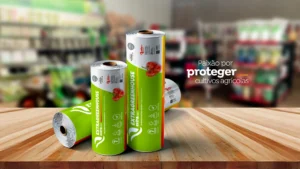
- Polywrap: Plástico Agrícola produzido com resinas e aditivos de ótima qualidade, garantindo uma vedação firme, resistência à tração e barreira total contra oxigênio e umidade, podendo ficar exposto no tempo por até 12 meses.
- Polynet: Agricultural net compatible with the main machines on the market, keeping the bale stable and uniform during baling, significantly increasing productivity.
In addition, these products were developed to withstand the farm’s daily routine and ensure that the effort made in the field is not lost during storage. With them, you avoid waste, maintain feeding predictability, and make better use of each harvest.
Download the catalog and see how to simplify pre-drying management with practical and durable solutions!